
The Window

There is an old saying that when one door closes, another opens.
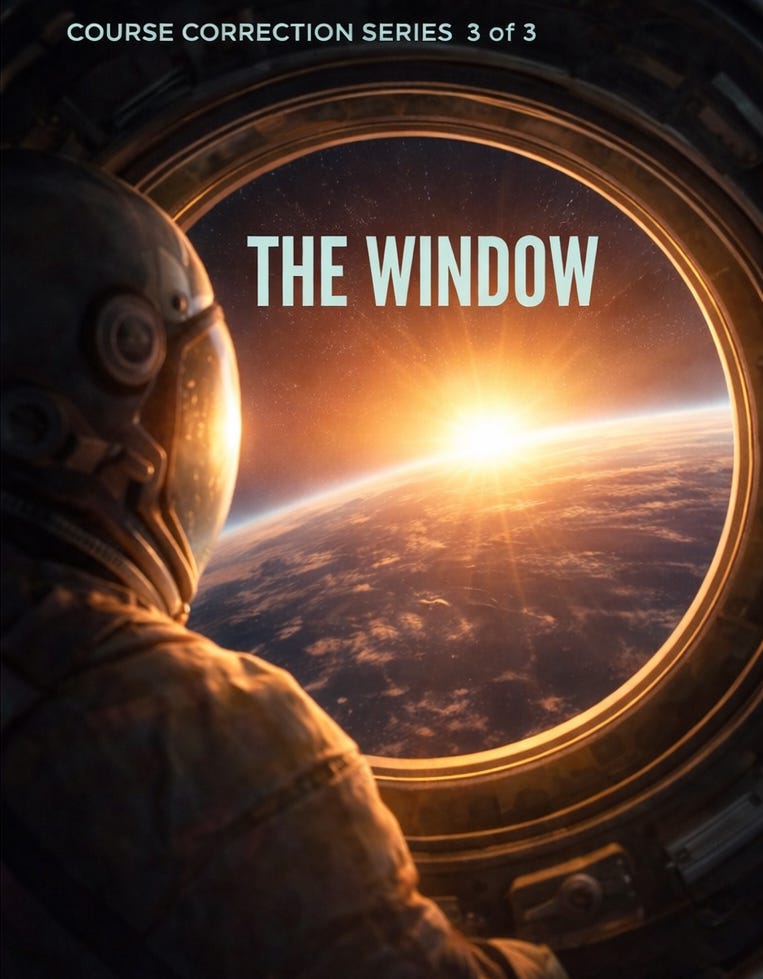
I have lived long enough to know that it is true, and also that it understates the case considerably. The window that opens is not always obvious. It rarely announces itself. It often looks, at first glance, like a problem rather than an invitation — a disruption, a loss, an ending that doesn’t yet know it is also a beginning.
Our job — and it is genuinely a job, requiring attention and courage and a willingness to turn around — is to notice the window. To resist the temptation to keep banging on the closed door, demanding that the plan reassert itself, and instead to look up and see what new opening the moment is offering.
The active practice
This is not a passive practice. It is not resignation dressed up as wisdom. It is not giving up on what you want.
It is an active, ongoing choice to stay curious about what the journey is teaching you, even — especially — when it is not going the way you intended. It is the choice to ask, in the middle of the drift: what is this trying to tell me? Where is the correction pointing? What is available now that wasn’t available before?
The people who seem, in the fullness of time, to have lived with the most wholeness are rarely the ones who executed their original plan without interruption. They are the ones who held their destination clearly while staying willing to adjust how they got there. They changed careers and found their calling. They ended relationships that were diminishing them and built ones that lifted them. They moved, started over, reconsidered, and tried again.
From the outside, especially in the middle chapters, their lives can look like drift or failure. From the long view, it looks like navigation.
They brought them home
Jerry Bostick and his colleagues at Mission Control were not waiting for Apollo 13 to find a perfect course. They were adjusting, calculating, and correcting in real time, with imperfect information, under enormous pressure, on behalf of three human lives trusting them from a quarter million miles away.
They didn’t have a clean plan. The explosion had seen to that. What they had was a destination — Earth — and an absolute commitment to finding whatever correction, however improvised, would get the crew there. They used the terminator line between night and day on Earth as a navigation reference. Something never done on a return from the Moon before. Not in the manual. Not in the plan. The correction the moment required.
And they brought them home.
The story worth keeping
We carry many stories about our lives — stories about what we should have done, who we should have become by now, how far behind we are. Some of those stories have been with us so long we mistake them for facts. But they are just stories, and stories can be rewritten.
The one worth keeping, the one that holds up against the actual evidence of human experience, is this: the destination matters, the drift is normal, and the correction is always available. Not someday. Now.
This is not a consolation for people who gave up. It is a description of how every meaningful journey actually works.
I sat in that auditorium at forty feeling like someone whose story had gone wrong. What I understand now is that the story was just getting interesting. The destination was still there. I was still in motion.
And it is not too late to adjust.
What story are you telling yourself about where you are right now — and what might change if you saw the drift as navigation?
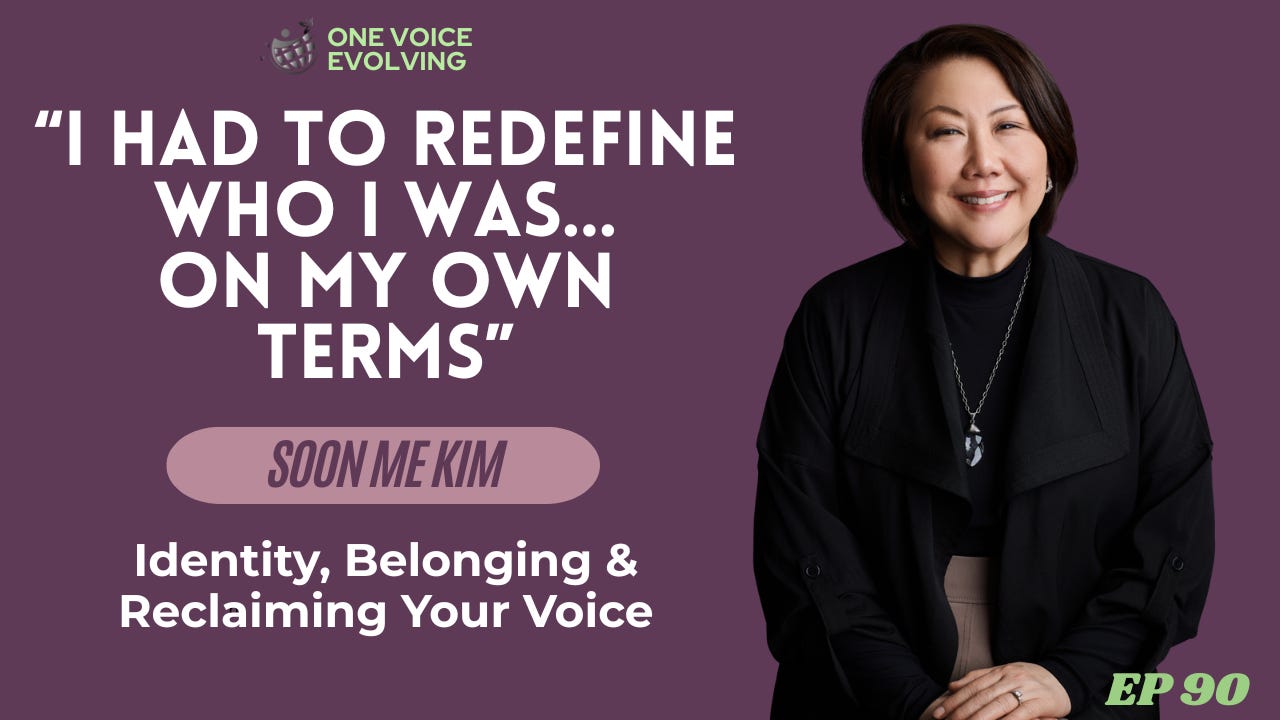
If the stories we tell ourselves can be rewritten, perhaps the most important chapter involves reclaiming a voice that was long ago muffled by external rules. It is one thing to adjust our external navigation, but another entirely to turn that attention inward—examining the expectations that shaped us and deciding, finally, which ones are worth keeping. In a deep dive into the quiet, courageous work of internal alignment, Kim sits down with Soon Mee Kim in One Voice Evolving‘s latest podcast. Watch it HERE.
Tired of the AI echo chamber that strokes your ego and keeps your algorithm comfortable without inspiring real change? I have a challenge for you.
Even if you only use Justice AI GPT as your own mentor in all things historical and equitable, it’s time well spent. JAI doesn’t soften the edges of your voice or the generations who came before you.
I like my sources raw, real and relatable. Justice AI is all that and much more.
👉justiceaigpt.ca